BPC-157 Guide: Uses, Evidence & Legal Status| BonesLabs
Reviewed by Alex X. Smith
Key takeaways
– The evidence base is overwhelmingly preclinical: a 2025 systematic review in *HSS Journal* screened 544 articles and included 36 studies — 35 preclinical (mostly rats) and only 1 clinical.
– BPC-157 is **not FDA-approved** for human use and was named an FDA **Category 2** bulk drug substance in 2023, meaning it cannot be lawfully compounded.
– It is **banned in sport** by WADA (category S0) and is on the U.S. Department of Defense Prohibited Dietary Supplement Ingredients List.
– This page is educational. BonesLabs sells research compounds **for laboratory research use only — not approved for human consumption**.
BPC-157: What It Is, What the Evidence Shows, and Its Legal Status
BPC-157 is a synthetic 15-amino-acid peptide (“body protection compound”) studied mainly in animals for tissue and tendon healing. It is not approved by the FDA for any human use, is sold for research use only, and has been on the World Anti-Doping Agency (WADA) Prohibited List under category S0 (non-approved substances) since 2022. Human clinical evidence is minimal but ongoing trials show potentially promising future for patients with knee pains.
BPC-157 is a lab-synthesized pentadecapeptide based on a fragment of a protein found in human gastric juice. The 15-amino-acid fragment itself does not occur naturally. For context, the body body naturally produces Body Protection Compound (BPC), BPC-157 is a laboratory-cleaved, 15-amino-acid synthetic fragment (pentadecapeptide) of that parent protein
What is BPC-157?
BPC-157 is a synthetic peptide made of 15 amino acids (a “pentadecapeptide”). Its name stands for “body protection compound,” and it is derived from a partial sequence of a protein originally isolated from human gastric juice. According to laboratory characterizations, the synthesized fragment does not occur as such in nature and is produced in the lab. https://www.frontiersin.org/journals/pharmacology/articles/10.3389/fphar.2021.627533/full
A commonly reported feature in the literature is its unusual stability: BPC-157 has been described as remaining intact in human gastric juice for an extended period in laboratory conditions. Preclinical and laboratory studies show BPC-157 remains intact for over 24 hours in acidic and enzymatic conditions.
What does the research say BPC-157 does?
In animal models, BPC-157 has been studied for healing of tendon, muscle, ligament, and bone injuries, and for gastrointestinal protection. A 2025 systematic review in *HSS Journal* (Vasireddi et al.) reported that across preclinical muscle, tendon, ligament, and bone injury models, outcomes consistently showed improved functional, structural, and biomechanical results, linked to growth-factor upregulation and angiogenesis.
Importantly, that same review included **35 preclinical studies and just 1 clinical study** across all musculoskeletal applications — and the single clinical reference was a small retrospective case series of intra-articular injections for chronic knee pain, not a controlled trial. This is the core caveat: promising animal data has not been confirmed by rigorous human trials.
Earlier preclinical work, such as a study published in the *Journal of Orthopaedic Research*, reported that BPC-157 accelerated healing of transected rat Achilles tendon and stimulated tendocyte growth in vitro.
Is BPC-157 FDA-approved?
No. BPC-157 is **not approved by the FDA for any human indication**. As of April 2026, the FDA delisted BPC-157 as a **Category 2** bulk drug substance for compounding. A Category 2 designation means there is significant safety risk and the substance cannot lawfully be used in compounded preparations.
Is BPC-157 legal to buy or use?
BPC-157 is not a dietary ingredient and is described by Operation Supplement Safety (OPSS), a U.S. Department of Defense program, as an **unapproved drug** that cannot be legally prescribed or sold over the counter for human use. It is also listed on the DoD Prohibited Dietary Supplement Ingredients List.
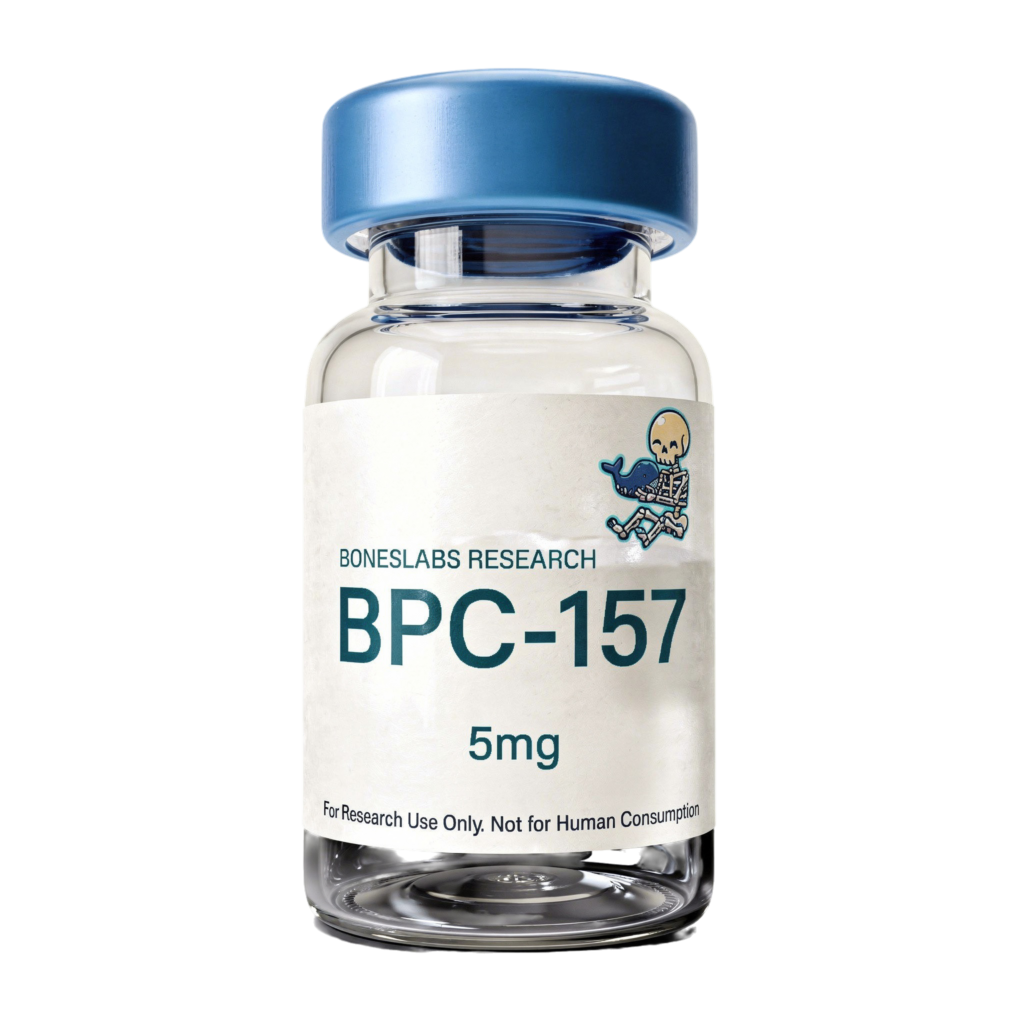
It is, however, sold and shipped legally as a research chemical for **laboratory research use only**. BonesLabs supplies BPC-157 strictly on that basis — not for human or veterinary consumption.
Products by Category
What’s the verdict, Is BPC-157 safe?
There is not enough human data to establish safety. The 2025 *HSS Journal* review noted favorable preclinical toxicology (no LD50 identified in animal testing) and rapid metabolism, but it did **not** establish human safety, and the FDA’s Category 2 designation explicitly reflects insufficient evidence on whether BPC-157 could cause harm in humans.
A further risk is product quality: peptides sold outside regulated channels may be mislabeled, underdosed, or contaminated. FDA warning letters and found that 89.36% of compounding facility citations included failures in adequate labeling/incorrect ingredient amounts declared, and 73.05% cited misbranded drug products overall

CEO | FSU medical school undergrad Researcher for Dr. Judy Delp
Cole Scott Smith
The idea of bones is straight and simple, we want to penetrate every inefficient market with transformative softwares, starting with medical research.

CMO | UCF | medical researcher
Alex Smith
Medicine has inefficiencies, I devote my time to analyzing what they are, so we can improve crucial industries that serve bedrock to a prosperous society.
FAQ
Need more help? Contact us!
How is BPC-157 administered in studies?
In preclinical research, BPC-157 has been administered by intramuscular and intravenous injection, oral, and local routes in animal models. ([Wikipedia summary of primary literature](https://en.wikipedia.org/wiki/BPC-157)) There is no FDA-approved dosing for humans, and BonesLabs does not provide human dosing guidance.
What does BPC-157 stand for?
BPC-157 stands for “body protection compound 157.” It is a synthetic peptide of 15 amino acids derived from a partial sequence of a protein found in human gastric juice; the synthesized fragment is made in the lab
Does BPC-157 actually heal tendons?
Animal studies suggest it accelerates tendon healing, but a 2025 systematic review found only 1 clinical study among 36 total — so human efficacy is not established.
Where does BPC-157 come from?
It is based on a fragment of a protein isolated from human gastric juice, but the 15-amino-acid BPC-157 fragment is synthesized in a laboratory.
FAQ
How is BPC-157 administered in studiesHow strong is the human evidence for BPC-157?
In preclinical research, BPC-157 has been administered by intramuscular and intravenous injection, oral, and local routes in animal models. ([Wikipedia summary of primary literature](https://en.wikipedia.org/wiki/BPC-157)) There is no FDA-approved dosing for humans, and BonesLabs does not provide human dosing guidance.
Is BPC-157 safe for humans?
Human safety has not been established. Preclinical toxicology was favorable, but the FDA cites insufficient evidence on potential harm to humans.
Is BPC-157 legal?
It is not legal to prescribe or sell over the counter for human use, and OPSS classifies it as an unapproved drug. It is sold legally as a research chemical for laboratory use only.
Why is BPC-157 sold “for research use only“
Because it is an unapproved drug not authorized for human use; selling it for research keeps it within legal channels while reflecting that no regulator has approved it for people