FDA peptide Reclassification 2026: what changed | BonesLabs
Reviewed by Alex X. Smith
The 2026 FDA peptide Reclassification: What Actually changed (and what didn’t)
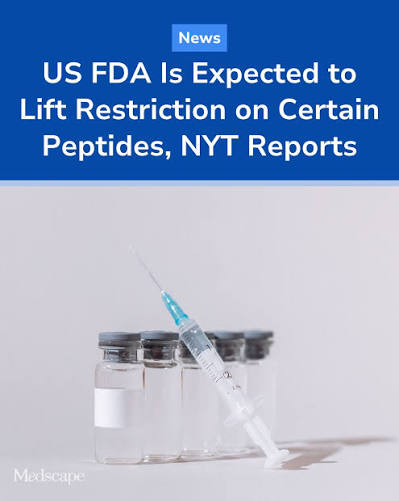
In April 2026, the FDA removed 12 peptides — including BPC-157, TB-500, and GHK-Cu — from its Category 2 “do not compound” list and scheduled advisory-committee review for July 23–24, 2026. This is a step toward legal pharmacy compounding, not FDA approval, and it does not make these peptides approved for general human use.
key takeaways
- The FDA removed **12 peptide bulk drug substances** from **Category 2** of its interim compounding policy in **April 2026**
- Removal from Category 2 is **not** the same as approval to compound, and **not** the same as **FDA approval** of the peptide as a drug.
- The **Pharmacy Compounding Advisory Committee (PCAC)** meets **July 23–24, 2026** to consider whether some of these belong on the 503A bulk list (a move toward “Category 1”).
- Every peptide discussed here is sold by research suppliers, including BonesLabs, **for research use only** — none is being marketed by us for human use or self-administration.
- Independent testing has repeatedly found quality problems in research-grade peptides, so provenance and third-party testing matter regardless of regulatory category.
Peptides have moved from a niche corner of compounding pharmacy into national headlines, driven by a policy shift that is widely — and often inaccurately — described online as peptides “becoming legal again.” The reality is more precise, and the precision matters, because the gap between “removed from a restriction list” and “FDA-approved medicine” is exactly where consumers get misled. A May 2026 survey of 2,491 U.S. adults found that **roughly half of people using research-grade peptides mistakenly believed the compounds were FDA-approved** ([Hone Health](https://honehealth.com/edge/peptide-survey-fda/)). This page explains what the 2026 change is, what it is not, and where the law actually stands.
What is the 2026 FDA peptide “reclassification”?
The 2026 change refers to the FDA removing a group of peptides from **Category 2** of its interim policy on compounding with bulk drug substances. Category 2 is the FDA’s list of substances it has flagged as potentially presenting **”significant safety risks”** in compounding; while a substance sits in Category 2, the agency has said it does not intend to allow it to be used in compounded preparations ([FDA](https://www.fda.gov/drugs/human-drug-compounding/certain-bulk-drug-substances-use-compounding-may-present-significant-safety-risks)).
The political framing began earlier in the year: HHS Secretary Robert F. Kennedy Jr. publicly signaled support for loosening peptide restrictions in **early 2026** ([Pharmacy Times](https://www.pharmacytimes.com/view/the-peptide-reclassification-everyone-s-talking-about-a-pharmacist-s-take-on-what-rfk-jr-s-announcement-actually-means)). The concrete regulatory action followed: in **April 2026**, the FDA announced it was removing **12 peptides** from Category 2 and scheduling advisory-committee review ([Orrick](https://www.orrick.com/en/Insights/2026/04/FDA-Announces-Removal-of-12-Peptides-from-Category-2-and-Schedules-PCAC-Meetings)).
Which peptides were removed from category 2?
According to law-firm analyses of the FDA action, the **12 peptides removed from Category 2** are ([Frier Levitt](https://www.frierlevitt.com/articles/fda-peptides-do-not-compound-list-update-2026/)):
- BPC-157
- Cathelicidin (LL-37)
- Dihexa acetate
- Emideltide (DSIP)
- Epitalon
- GHK-Cu (injectable routes)
- KPV
- Pegylated Mechano Growth Factor (PEG-MGF)
- Melanotan II
- MOTS-c
- Semax (heptapeptide)
- Ipamorelin
which peptides are still restricted?
Not every peptide the FDA has ever flagged is affected. Substances the agency has not removed remain in **Category 2**, meaning the FDA still does not intend to permit their use in compounding while under review. Because the public roster of what stayed versus what moved is being reported inconsistently across outlets, the only reliable source is the FDA’s own list and the PCAC docket.
What happens at the July 2026 PCAC meeting?
The **Pharmacy Compounding Advisory Committee (PCAC)** — the FDA advisory body that evaluates substances nominated for the 503A bulk list — is scheduled to meet **July 23–24, 2026**. Law-firm reporting indicates that a subset of the removed peptides will be reviewed at that summer meeting, with the remainder scheduled for separate PCAC consultation **before February 28, 2027** ([Frier Levitt](https://www.frierlevitt.com/articles/fda-peptides-do-not-compound-list-update-2026/)). PCAC makes **recommendations**; the FDA then decides whether to add a substance to the 503A list. A favorable recommendation is a signal, not a final rule.
Does this reclassification mean the peptides are FDA approved?
No. This is the myth-buster that matters most. **Reclassification is not FDA approval.** Approval is a separate, far higher bar: it requires a New Drug Application supported by Phase 1–3 clinical trials demonstrating safety and efficacy for a specific use. As the Pharmacy Times analysis stresses, the compounding-list change **”does not establish proven safety, proven efficacy, or standardized dosing”** ([Pharmacy Times](https://www.pharmacytimes.com/view/the-peptide-reclassification-everyone-s-talking-about-a-pharmacist-s-take-on-what-rfk-jr-s-announcement-actually-means)). Most of the peptides in this discussion have never completed the trials that FDA approval requires for their popularly promoted uses.
The distinction between **FDA-approved**, **compounded**, and **research-use-only** peptides is explained in more depth in [Are peptides legal in the U.S.?](/learn/are-peptides-legal).
Why were these peptides restricted in the first place?
The FDA placed several peptides in Category 2 after reviewing them for safety concerns during the compounding-nomination process. For **BPC-157** specifically, the agency noted that compounded drug products containing it **”may pose a risk for immunogenicity for certain routes of administration”** and lacked adequate data to characterize its safety ([FDA](https://www.fda.gov/drugs/human-drug-compounding/certain-bulk-drug-substances-use-compounding-may-present-significant-safety-risks)). Restriction reflected data gaps and potential risks, not a determination that a peptide is inherently dangerous — but the gaps are real, and they don’t disappear because a substance moves off a list.
How does this affect GLP-1s like semaglutide and tirzepatide?
The peptide-reclassification story is often confused with the separate GLP-1 compounding saga, but they moved in **opposite directions**. After the FDA removed semaglutide and tirzepatide from its drug-shortage list, the legal basis for large-scale compounding narrowed: **503B outsourcing facilities generally can no longer lawfully compound these drugs in standard formulations**, and 503A pharmacies may do so only where they can show a preparation is not “essentially a copy” of the approved product ([Frier Levitt](https://www.frierlevitt.com/articles/the-return-of-503b-compounding-of-glp-1-medications/)). So while some research peptides were being *removed* from a restriction list in 2026, compounded GLP-1s were being *further restricted*.
Is BPC-157 banned in sports?
Yes. Regardless of its compounding status, **BPC-157 is prohibited in sport** and is treated as an experimental substance by anti-doping authorities ([U.S. Anti-Doping Agency](https://www.usada.org/spirit-of-sport/bpc-157-peptide-prohibited/)). Athletes subject to WADA or USADA testing should treat compounding-list changes as legally irrelevant to their eligibility. See [BPC-157 regulatory status](/learn/bpc-157-regulatory-status) for detail.
Are research-grade peptides high quality just because they’re now off the list?
No — regulatory category says nothing about the contents of a given vial. A January 2026 analysis cited alongside the Hone survey found that **roughly 3 in 10 research-grade peptide products failed basic quality checks** for issues such as mislabeling, purity, or incorrect dosing ([Hone Health](https://honehealth.com/edge/peptide-survey-fda/)). This is why third-party testing, certificates of analysis, and transparent sourcing matter more than any list. Learn [what “research use only” actually means](/learn/research-use-only-explained) before evaluating any supplier.
What should you take away from the 2026 change?
The 2026 reclassification is a meaningful procedural shift: the FDA cleared a regulatory obstacle for a defined set of peptides and set up an advisory review. It is **not** a declaration that these peptides are safe, effective, approved, or ready for unsupervised human use. For consumers and researchers, the practical picture is unchanged: these remain **research compounds**, the science is still incomplete, and quality varies widely between suppliers.


Author | FSU medical school undergrad Researcher for Dr. Judy Delp
Author | UCF Law | medical researcher
FAQ
What is the FDA peptide reclassification of 2026?
It is the FDA’s April 2026 removal of 12 peptides from Category 2 of its interim compounding policy — the “do not compound” list — plus scheduled advisory-committee review on July 23–24, 2026. It changes a compounding restriction; it does not approve the peptides as drugs.
Which peptides were removed from the Category 2 list?
Law-firm summaries identify 12: BPC-157, LL-37, Dihexa acetate, DSIP (Emideltide), Epitalon, injectable GHK-Cu, KPV, PEG-MGF, Melanotan II, MOTS-c, Semax, and TB-500. Confirm the exact roster against the official FDA notice, as consumer articles circulate differing lists.
Does this mean peptides are now legal to buy and use?
Not automatically. Removal from Category 2 does not make a substance eligible for compounding under section 503A; a peptide generally must be affirmatively added to the 503A bulk list first. Research suppliers continue to sell these compounds for research use only.
FAQ
Is reclassification the same as FDA approval?
No. FDA approval requires a New Drug Application backed by clinical trials proving safety and efficacy. Reclassification establishes none of that — no proven safety, efficacy, or standardized dosing.
What is the July 23–24, 2026 PCAC meeting??
It is a Pharmacy Compounding Advisory Committee meeting where the FDA’s advisers review whether certain peptides should be added to the 503A bulk list. PCAC issues recommendations; the FDA makes the final decision.
How does this affect compounded semaglutide and tirzepatide??
Those GLP-1s moved the other way. After they came off the FDA shortage list, 503B facilities generally can no longer compound them in standard formulations, and 503A compounding is limited to preparations that are not “essentially a copy” of the approved drug.